01 / START WITH PEOPLE
Fall in love with the problem.
Understand the person, the task, and the context before committing to a solution. Keep real user needs visible when business priorities and technical constraints compete for attention.
DESIGN LEADERSHIP / A PRACTICE, NOT A TITLE
I build teams that think clearly, make ideas tangible, and learn together. My philosophy is grounded in hands-on design—and sharpened every time I teach, mentor, critique, or build.
Give people direction.
Give ideas a shape.
Give learning room.
Leadership means creating the conditions for good decisions: a shared understanding of the problem, the confidence to challenge assumptions, and enough ownership to act.
I stay involved in research, information architecture, interaction design, and prototyping. The goal is to help the team work through uncertainty while building the judgment to move forward independently.
01 / THE PRINCIPLES
01 / START WITH PEOPLE
Understand the person, the task, and the context before committing to a solution. Keep real user needs visible when business priorities and technical constraints compete for attention.
02 / EARN TRUST
Listen carefully, explain the reasoning, and own what I do not know. Invite different perspectives and make belonging part of everyday collaboration, so people can challenge an idea without questioning their place on the team.
03 / ADVOCATE FEEDBACK
Bring sketches, questions, and prototypes into the conversation early. Critique should strengthen the decision and help the designer grow. Feedback is most useful when there is still room to act on it.
04 / EMPOWER OTHERS
Give designers opportunities to present, negotiate, mentor, and lead. Coach the reasoning behind their choices, then give them the space and visibility to own the outcome.
02 / THE WAY WE LEARN
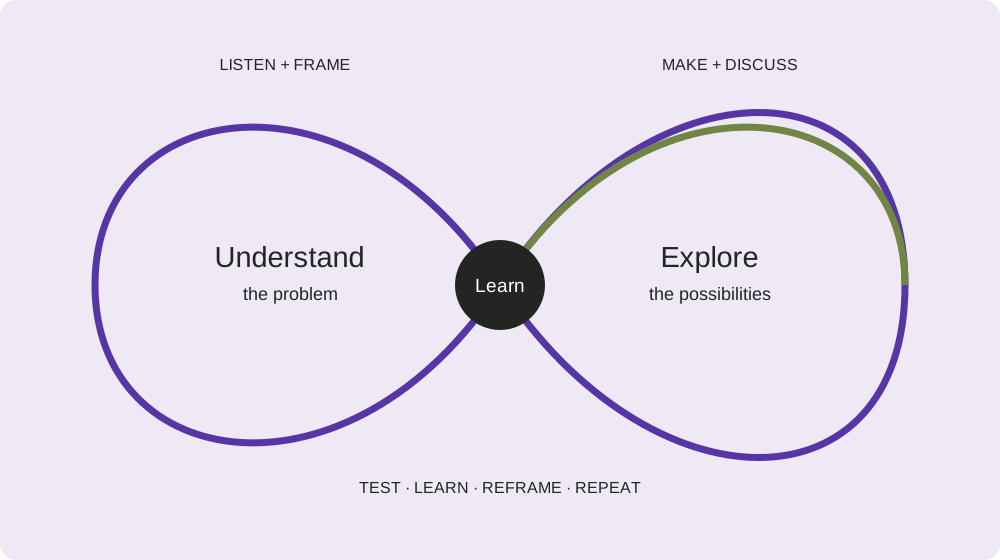
My design-thinking practice moves between understanding the problem and exploring possible solutions. Research shapes the prototype; seeing the prototype often reveals a better question.
That loop connects strategy to craft. I facilitate the conversation and stay close enough to the work to sketch an alternative, untangle a flow, or help make the next experiment concrete.
03 / AI IN THE DESIGN PROCESS
I use and advocate for AI throughout the design process. It helps us organize research, explore alternatives, and build prototypes sooner—so the team can spend more time discussing the experience, testing assumptions, and improving the details.
Use AI to organize notes, surface possible themes, explore questions, and support synthesis. Check interpretations against the source material and distinguish evidence from assumptions.
A clearer question to investigate.
Use Figma Make and Lovable to turn an idea into a prototype people can interact with. Bring Figma AI, Shuffle, and Cursor into exploration and implementation as the work requires.
Something tangible to discuss.
Walk through the experience with the team and users. Explore alternatives, test the flow, and refine the interaction. Faster iteration creates more opportunities to learn before committing.
A better-informed design decision.
My standard stays human-centered: research claims need evidence; prototypes need evaluation; the final experience needs clear interactions, accessibility, and care.
04 / TEACHING MAKES ME A BETTER LEADER
Teaching forces me to make the reasoning visible. Mentoring reminds me that people need different kinds of support. Both sharpen the way I lead teams: ask better questions, give specific feedback, and help someone take the next step themselves.
My approach stays practical. Work through an actual problem. Make an idea tangible. Discuss the choices. Revise with intention. The same habits belong in a classroom, a portfolio review, and a product team.
2025 — PRESENT
Adjunct Professor, Segal Design Institute. Human-centered design, research, ideation, and iterative prototyping.
2019 — 2024
Education and mentorship for hundreds of designers, including project critique, portfolio development, and interview preparation. Most Requested Mentor in 2021 and 2022.
2014 — 2016
User Experience Design Instructor. Building practical design skills and the ability to explain the thinking behind the work.
05 / WHAT THIS LOOKS LIKE ON A TEAM
Connect objectives to the user problem and business priorities. Clarify the decisions the team owns and what success should look like.
Create regular space for work in progress. Help unblock a designer, compare alternatives, and challenge the reasoning while changes are still inexpensive.
Use reviews to align on decisions and regular sharing to spread learning. Let designers present their work, build influence, and grow into leadership.
THE NEXT CHAPTER
I’m exploring Senior Manager and Director roles in UX & Product Design. Based in Colorado. Open and eager to relocate for the right team.
Start a conversation